Low-FODMAP Holiday Recipes to Celebrate the Season
Savor the Holidays Without Digestive DiStress
The holiday season brings beautiful traditions that connect us to family, friends — and our selves too. When it comes to holiday traditions, it seems like there’s at least one that translates across the globe. Food.
No matter where you live or how you celebrate the season, few can argue about why we love our holiday foods. However, if you have Irritable Bowel Syndrome, IBS, you may not love the way your gut feels after eating the wrong foods.
If you’re dealing with IBS, you probably don’t like the surprises that come with it. Like sneaky, stinky flatulence. Or perhaps bloating. The feeling that gives you no option except to unbutton your pants after a meal. The fact is, good eats can turn you into the Great Houdini when you’re dashing away to the restroom—while the party goes on without you.
Here’s the good news. We’ve done some recipe rehab to help restore your tummy troubles. These Low-FODMAP holiday recipes are here to help you celebrate the season with a happy belly. The first step is knowing which foods to swap out and which ones to keep.
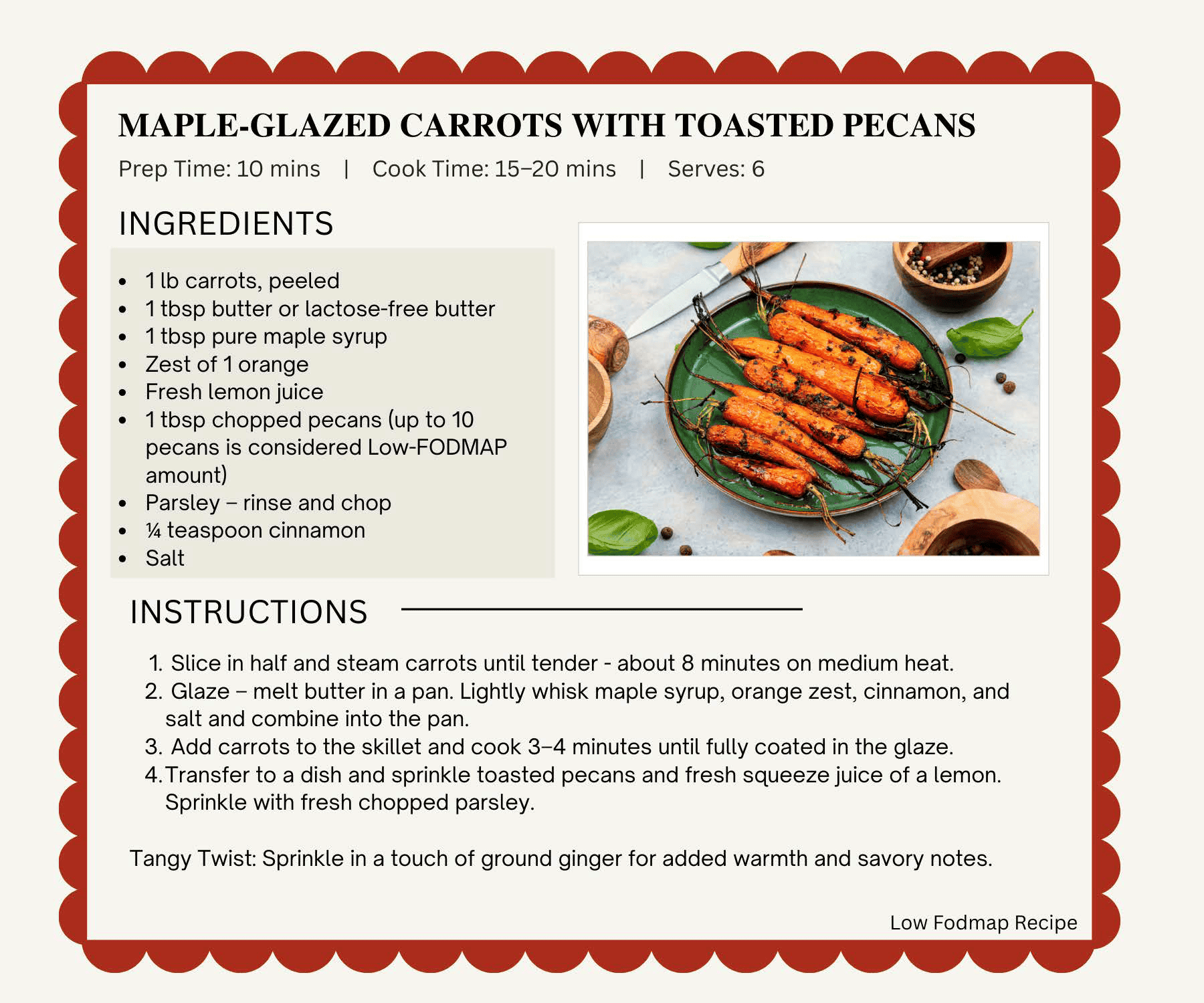
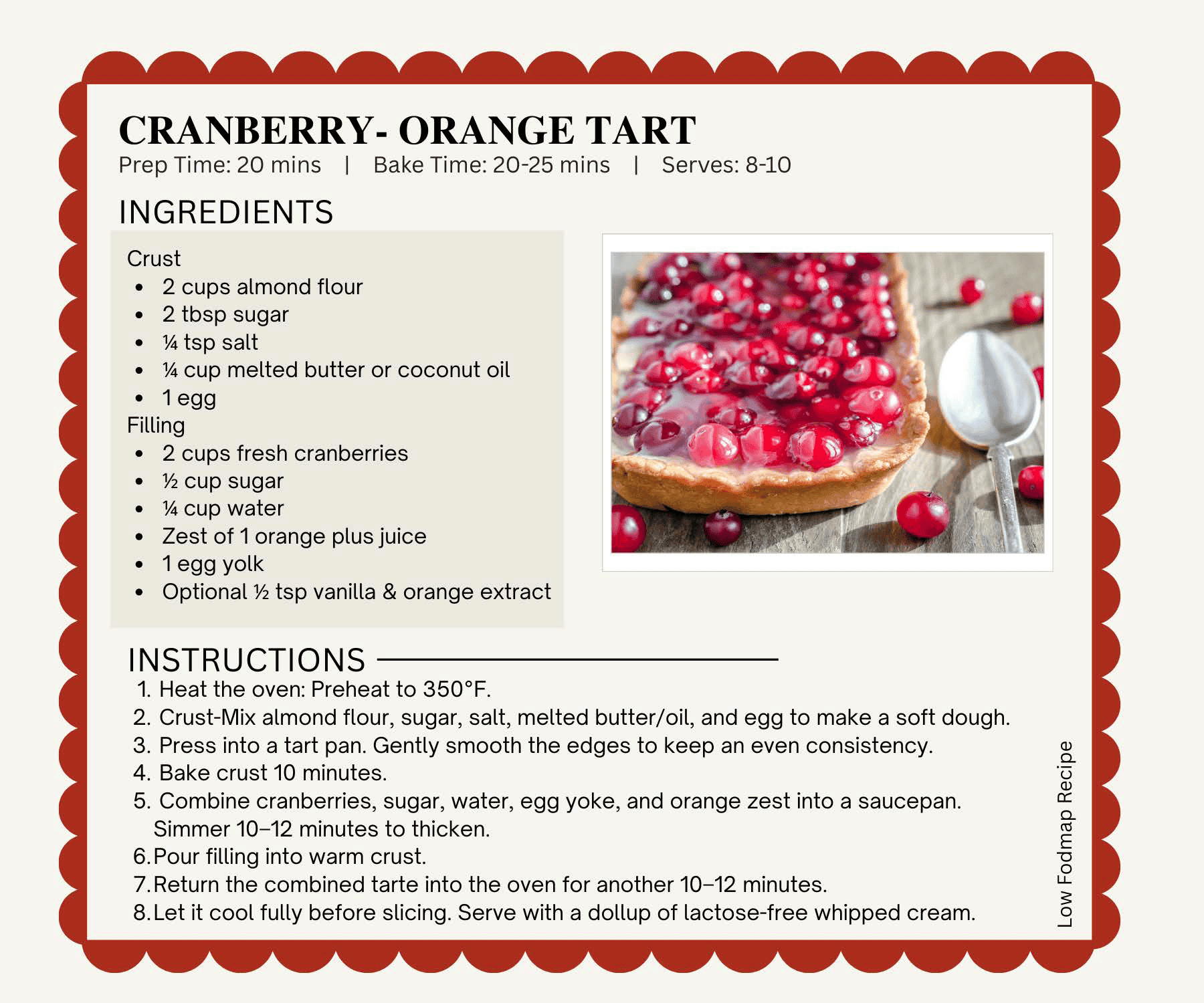
Use these festive Low-FODMAP holiday recipes so you can enjoy warm delicious holiday meals all season long. Serve the tasty holiday appetizer, savory side dish and delectable dessert at your next gathering.
Low FODMAP foods are low in carbohydrates known to cause digestive issues like bloating, gas and abdominal pain. They’re also referred to as fermentable short-chain carbohydrates.
People with IBS may find some relief from symptoms when they switch to a low FODMAP diet. Some people who benefit from low FODMAP diets may have lactose intolerance, gluten sensitivity or other food intolerances.
Source: Cleveland Clinic
FODMAP– Fermentable Oligosaccharides, Disaccharides, Monosaccharides and Polyols
Monash University is a well-respected resource for learning more about evidence-based science around low FODMAP foods.
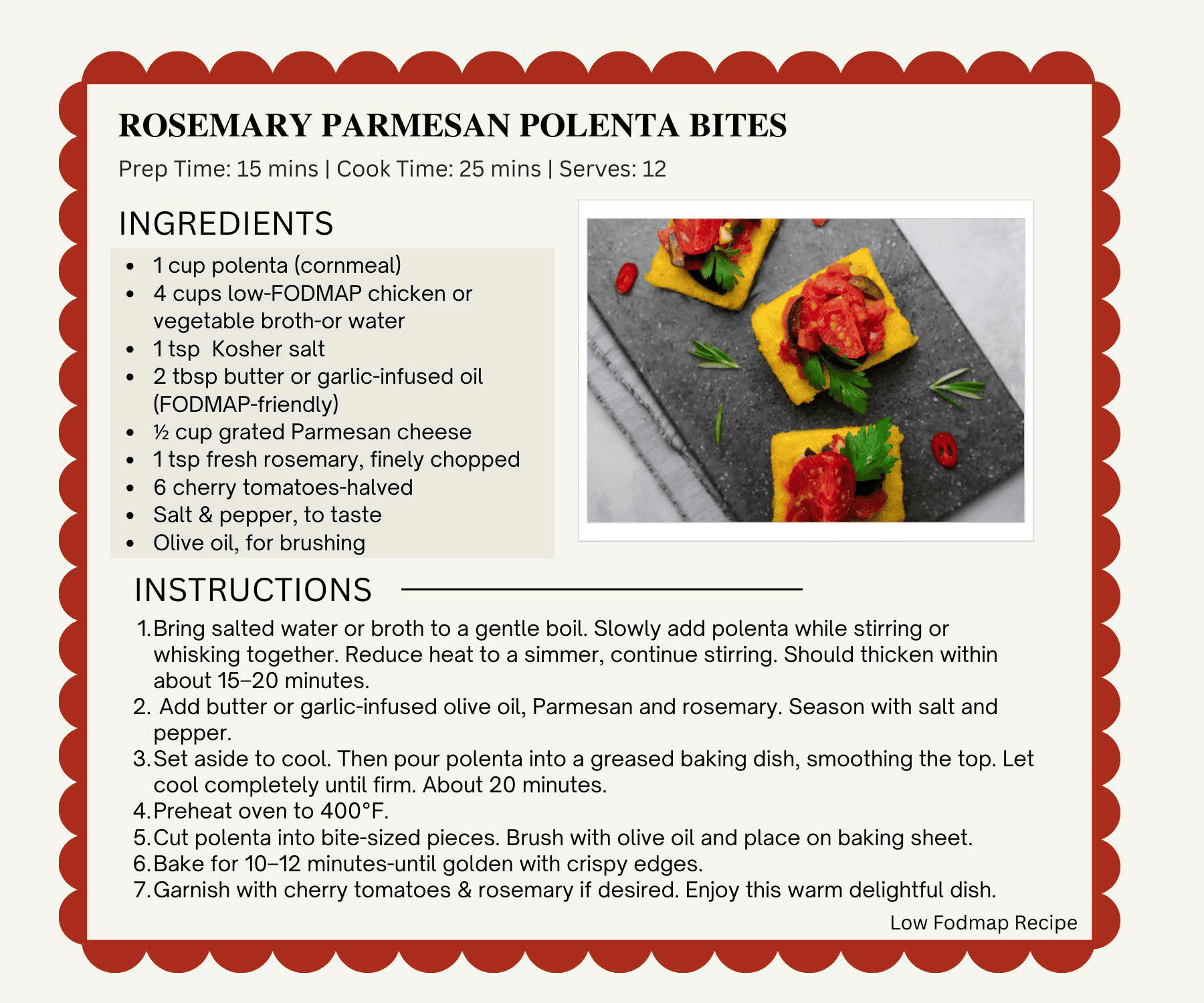
Bring salted water or broth to a gentle boil. Slowly add polenta while stirring or whisking together. Reduce heat to a simmer, continue stirring. Should thicken within about 15–20 minutes.
Add butter or garlic-infused olive oil, Parmesan and rosemary. Season with salt and pepper.
Set aside to cool. Then pour polenta into a greased baking dish, smoothing the top. Let cool completely until firm. About 20 minutes.
Preheat oven to 400°F.
Cut polenta into bite-sized pieces. Brush with olive oil and place on a baking sheet.
Bake for 10–12 minutes-until golden with crispy edges.
Garnish with cherry tomatoes and rosemary if desired. Enjoy this warm and delightful dish.
Low FODMAP Tips
No polenta? No problem. Use regular cornmeal and pulse it in the food processor for a finer version. Just don’t over process it or you’ll end up with a gummy texture.
Want to make this dish ahead of time? Simply store in the fridge the day before serving it.
To provide the best experiences, we use technologies like cookies to store and/or access device information. Consenting to these technologies will allow us to process data such as browsing behavior or unique IDs on this site. Not consenting or withdrawing consent, may adversely affect certain features and functions.
Functional
Always active
The technical storage or access is strictly necessary for the legitimate purpose of enabling the use of a specific service explicitly requested by the subscriber or user, or for the sole purpose of carrying out the transmission of a communication over an electronic communications network.
Preferences
The technical storage or access is necessary for the legitimate purpose of storing preferences that are not requested by the subscriber or user.
Statistics
The technical storage or access that is used exclusively for statistical purposes.The technical storage or access that is used exclusively for anonymous statistical purposes. Without a subpoena, voluntary compliance on the part of your Internet Service Provider, or additional records from a third party, information stored or retrieved for this purpose alone cannot usually be used to identify you.
Marketing
The technical storage or access is required to create user profiles to send advertising, or to track the user on a website or across several websites for similar marketing purposes.